Modern Material Handling Feature: Automation where it counts at Barrett

Katherine Wroth • September 9, 2024
By deploying a drone-based inventory monitoring solution at its Hillsborough, N.J., facility, Barrett Distribution Centers, a growing 3PL, has taken license plate accuracy to the next level, helping with order picking and eliminating time spent on manual cycle counts.
  • Slide title

    Write your caption here
    Button
  • Slide title

    Write your caption here
    Button
  • Slide title

    Write your caption here
    Button
  • Slide title

    Write your caption here
    Button
  • Slide title

    Write your caption here
    Button
  • Slide title

    Write your caption here
    Button
  • Slide title

    Write your caption here
    Button
  • Slide title

    Write your caption here
    Button
  • Slide title

    Write your caption here
    Button
  • Slide title

    Write your caption here
    Button

By  at


Extremely high accuracy over sitting in storage is a nice thing to have in a DC, but traditionally it has come at a cost: hours of labor spent hand-scanning bar coded license plates or “LPs” on pallets or cases and then reconciling any discrepancies.


Of course, the cost of not expending labor on LP accuracy is downstream delays in filling orders due to misplaced inventory. Given the choice between unhappy customers or expending some labor on LP counts and inventory adjustments, many operations have chosen some form of LP counting and inventory monitoring.


This dedication to inventory accuracy has long been a pillar of operational excellence for Barrett Distribution Centers, a  company, explains, Barrett’s vice president of business process optimization.


“LP accuracy is one of our key internal drivers for success at Barrett. The more accurate your inventory is, the more productive you can be—because you don’t have unexpected shortages—so you can just pick orders instead of searching for inventory or having to replenish,” says Rapoza. “Our senior leadership team, Tim Barrett and Art Barrett, also view high LP accuracy as a driver for employee satisfaction because when it comes time to pick, our associates can execute their work without delay, which contributes to a high level of job satisfaction. As a result, we take LP accuracy very seriously, because it’s good for our customers, and it’s also good for our employees.”


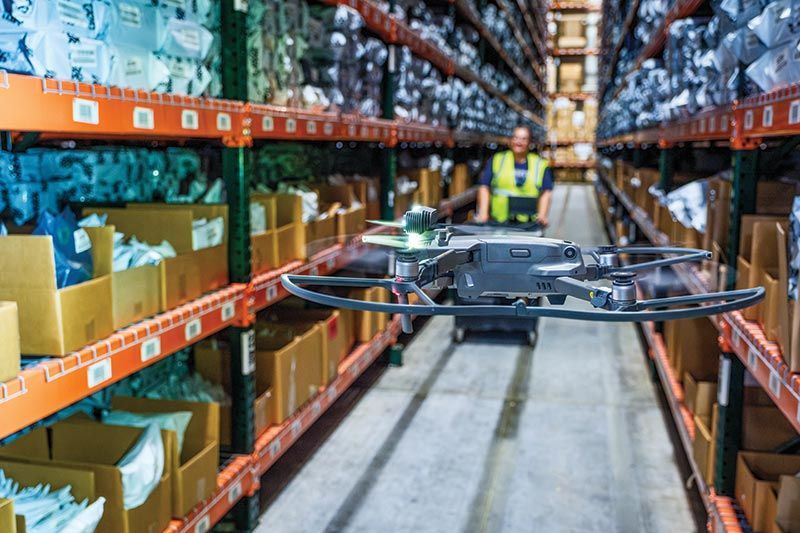
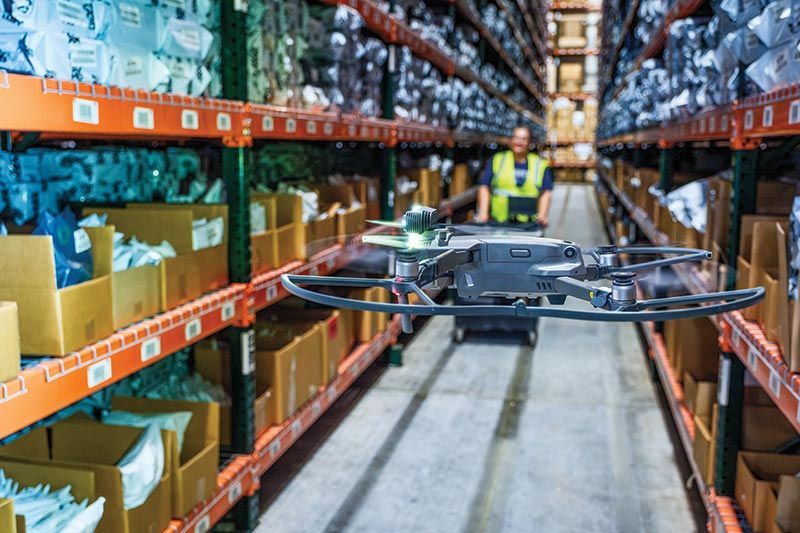
The last couple of years have seen Barrett Distribution Centers further improve on LP accuracy while removing the cost involved in manual data collection by deploying a warehouse drone solution ( to automate the reading and monitoring of LP labels in storage positions. The system’s software, which uses  provides a dashboard view that compares what the drone missions find against  data.


Barrett doesn’t use the drones at all of its warehouses, but it does use them at six sites to automate the counting of LP bar codes on pallets or to count unique cases with LP bar codes.


A single operator managing a drone mission can capture LPs more quickly and accurately than a team of inventory specialists can with manual scanning. The cost comparison is not even close, Rapoza adds. Manual LP cycle counting costs roughly $1.50 per scan; and the drone system costs around 10 to 20 cents per scan—a fraction of the cost.


The drones have been effective at reading the labels and generating reports that pinpoint any inventory variances with Barrett’s WMS. At sites that use the drones, LP accuracy exceeds 99%, and at one facility in Hillsborough, N.J., where the drones are used to capture LPs on unique cases, the accuracy level has reached 99.9%. The drones are used frequently to keep LP accuracy at a near-perfect level.


“The ease of being able to capture a high volume of LP information with a single drone, compared to using a team of people, means that we can perform LP cycle counts more frequently now, so the inventory variances surface much faster,” says Rapoza. “When we first deployed the drones, we saw a pretty significant spike in inventory variances that we were then able to correct in a much shorter time-frame than if we were just deploying people to count LPs. That helps us keep inventory accuracy optimally high for the sites and areas we’ve deployed them in.”


Targeted use cases


Since 1941, Barrett has provided 3PL services, including direct-to-consumer (DTC) fulfillment, omni-channel distribution, as well as transportation management and retail compliance for clients.


Customers represent industries including apparel and footwear, health and beauty, consumer packaged goods, consumer electronics, food, candy, grocery and automotive. The company currently has 23 DCs nationwide comprising roughly 7 million square feet, including sites in Greater Boston, New Jersey, New York, Baltimore, Memphis, Dallas and California.


With a motto of, “Big enough to do the job and still small enough to deeply care about your business,” Barrett adapts its services around the fulfillment needs of its clients. For most of its clients, the WMS used to manage and fulfill orders is based on a system called Synapse (, formerly Zethcon).


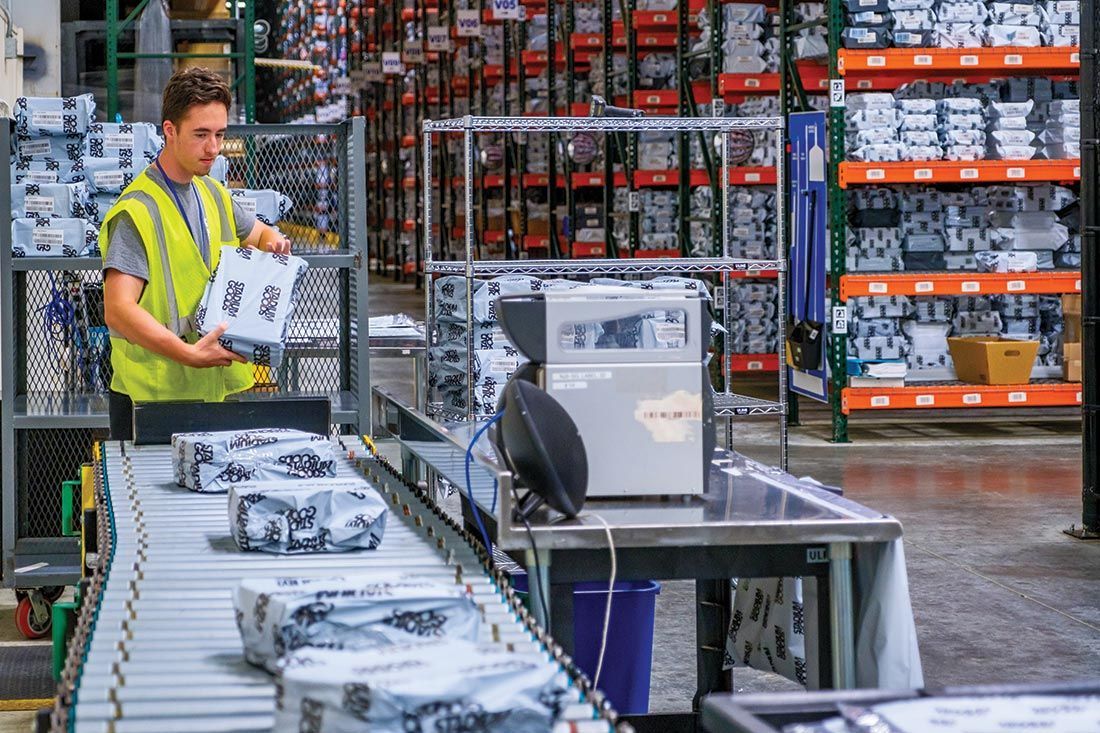
The use of Gather AI drones across Barrett’s network is largely focused on reading LPs on pallets, though at its fulfillment center in Hillsborough, N.J., the drones are used to scan LP labels on unique cases of shoes for Barrett’s client Stadium Goods, a sneaker and apparel marketplace. These aren’t the average sneakers one would find at any retail store, but rather, collector and special edition shoes that in some instances might fetch several thousand dollars per pair. Most end-customers are typically buying one pair of unique shoes.


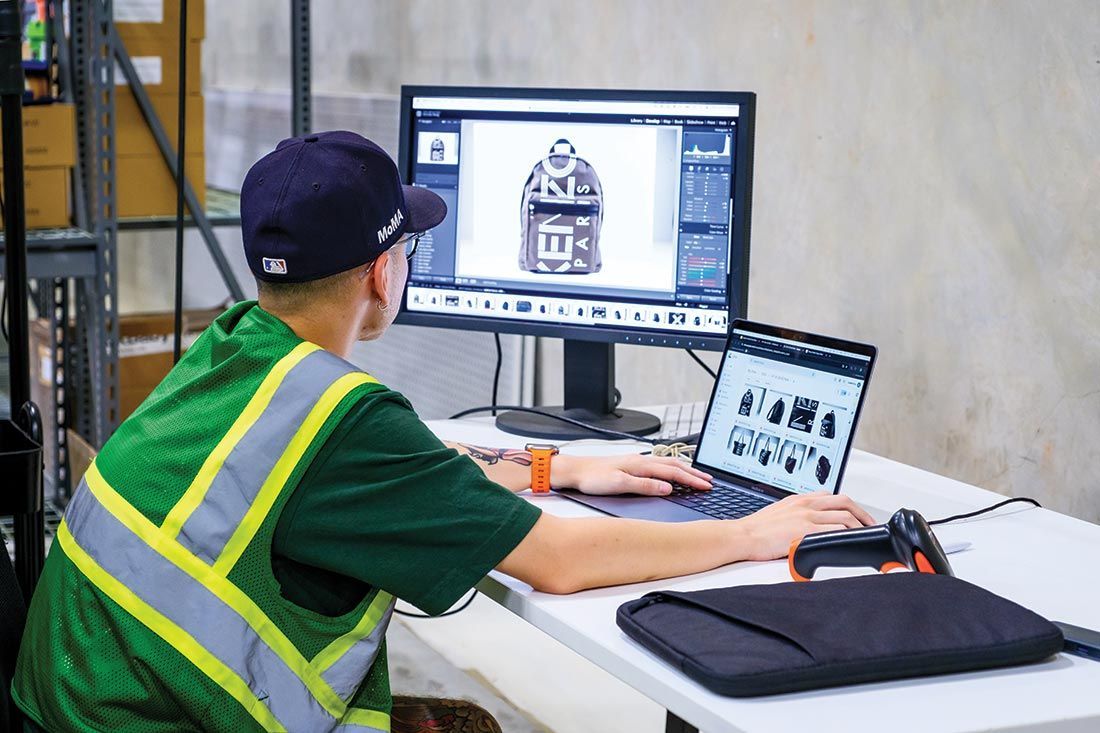
As a result, one shoebox with one pair of shoes typically equates to one case for the vast majority of goods in storage at Hillsborough. An inventory authentication team from Stadium Goods works on site to authenticate each pair of shoes coming in before it is processed and stored by Barrett associates.


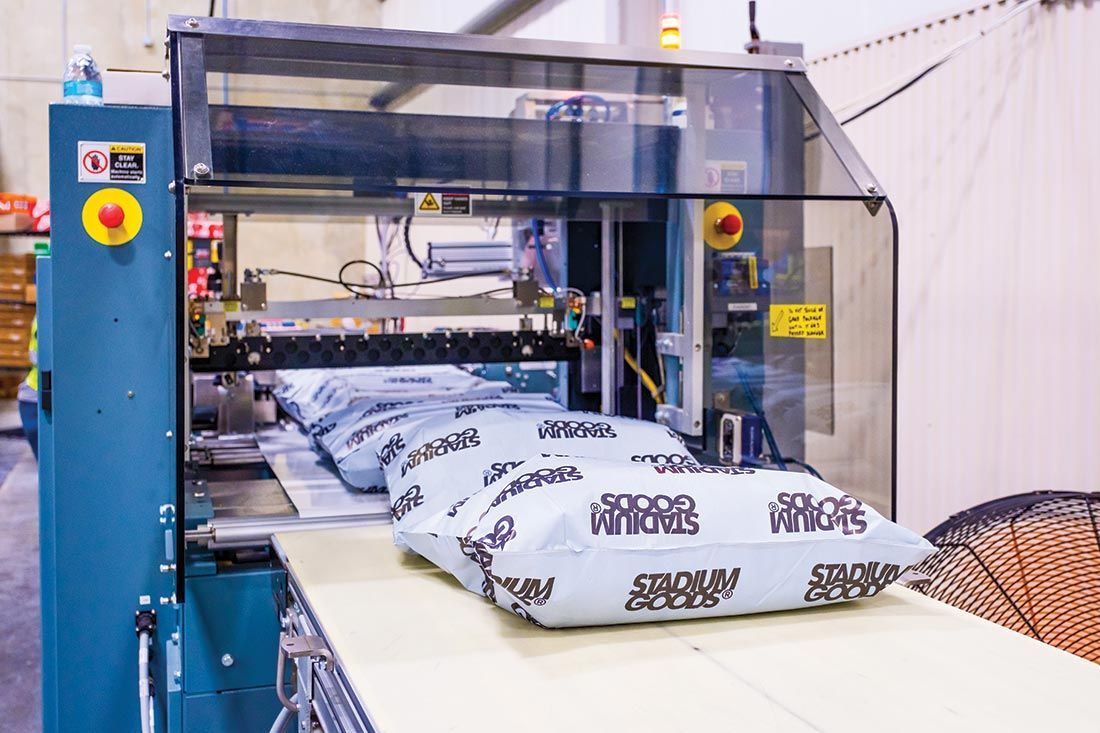
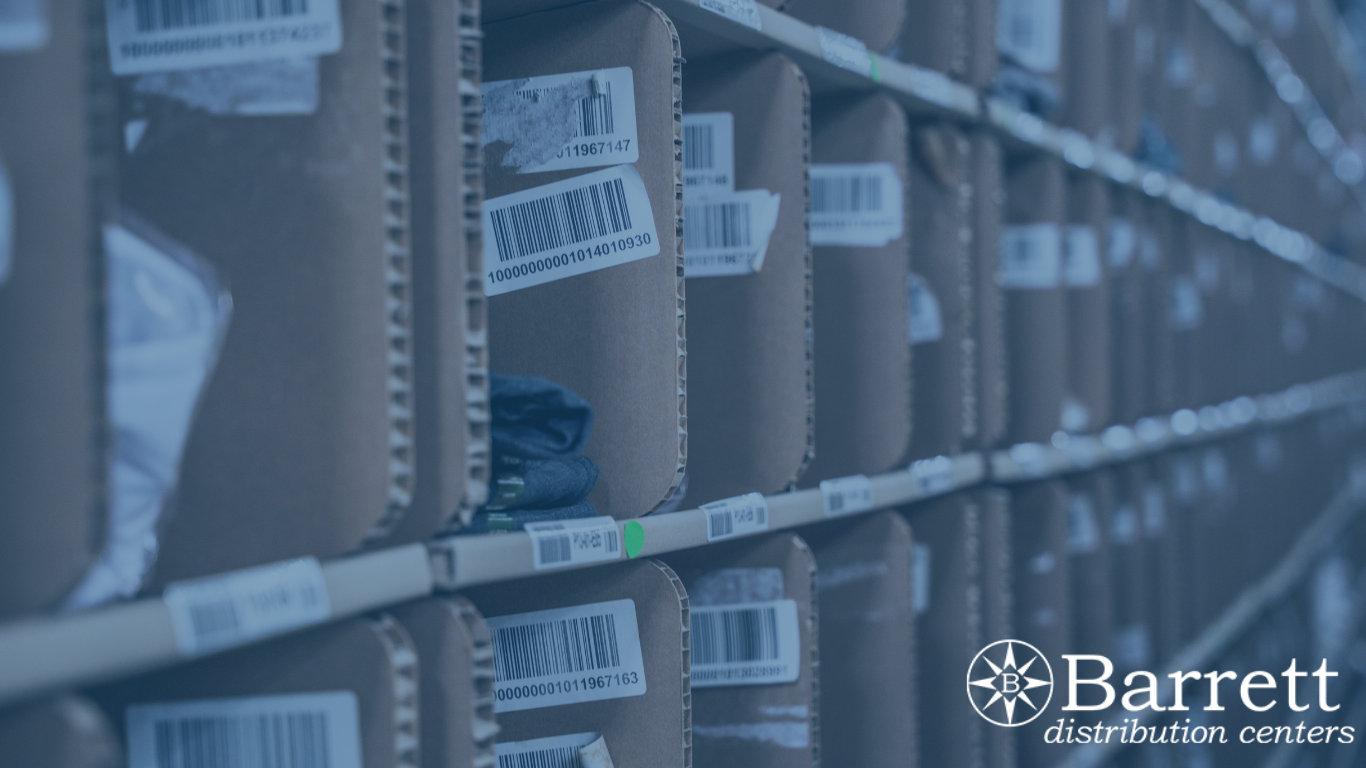
Each case is polybagged at the DC after being authenticated, with a unique LP bar code placed on the bag prior to being placed in very narrow aisle (VNA) storage with selective racking. The site uses a modified auto bagging system with a print-and-apply function (Sealed Air) to automate the process of placing each shoebox into a Stadium Goods branded polybag and applying the LP bar code to it.


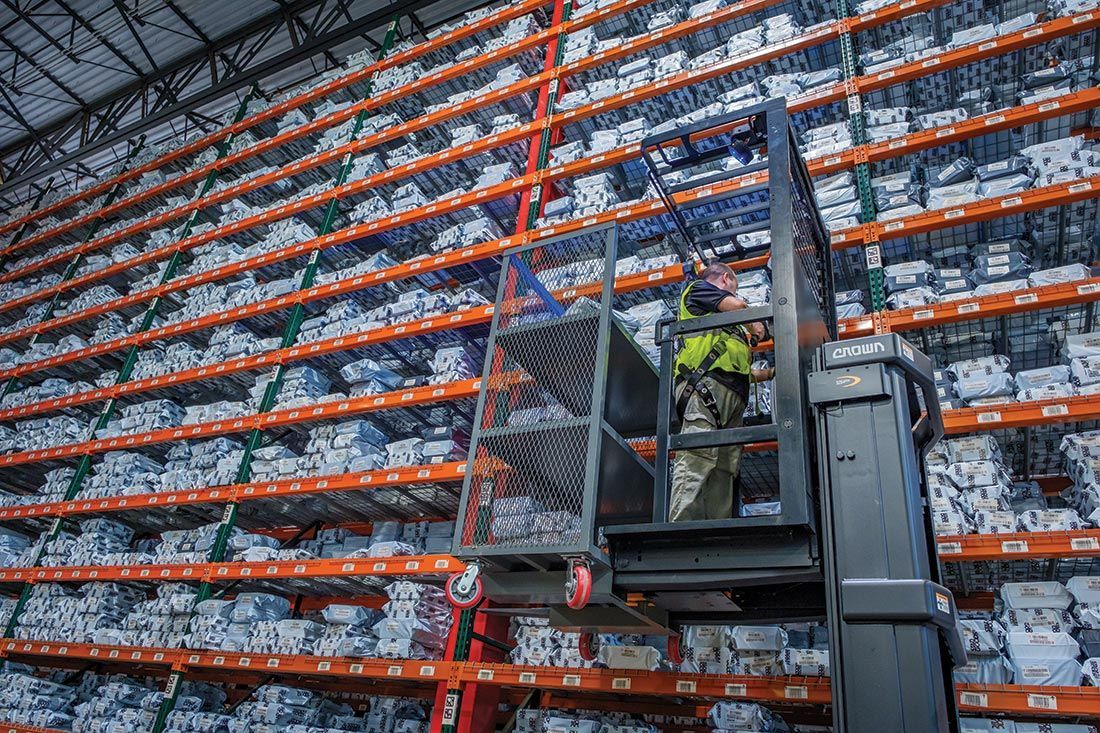
While a small percentage of these unique cases hold a few pairs of shoes or other apparel items, the vast majority of the cases/bags hold one pair of shoes. Usually, the Hillsborough location has close to a half-million pairs of shoes or other unique cases for Stadium Goods stored on the 34 aisles of VNA racking. When it comes time to fill orders, the picking is done from the VNA storage by associates on orderpickers.


The Stadium Goods inventory is ideal for drone inventory monitoring, says Rapoza, since each case is a unique, high-value item that needs to be in the location the WMS indicates it will be in, since there is no handy supply of the same SKU in reserve. High LP accuracy is important for all of Barrett’s clients and processes, Rapoza explains, but for Stadium Goods, it’s a must.


“We run the drones in a handful of facilities for different storage mediums, but for Stadium Goods, we had a unique value proposition for the drones, because the end customer is buying a specific pair of shoes, so the LP accuracy has to be near perfect,” Rapoza says. “If you think about it, we need to pick a specific pair of shoes, and if those shoes aren’t in the exact location where our WMS system says they should be, now you have to go find that case in a sea of a half-million pairs of shoes.”


Before deploying the drone solution, Barrett maintained a high level of LP accuracy for Stadium Goods by manual cycle counting by Barrett’s team of inventory control specialists. Now, however, the drones automate the data capture piece, with one inventory control specialist able to manage each drone flight, rather than needing a whole team of people to go out to periodically scan all the LPs in a section of the VNA storage.


Importantly, adds Rapoza, the drones aren’t only a time saver for the inventory team.


“Yes, the drone solution eliminates the need to have our inventory control associates spend time manually scanning LP labels, but the benefit goes beyond labor savings for that one task,” Rapoza says. “The system helps with customer satisfaction and same-day service levels by supporting the need to get the product out the door accurately and on time. The higher we can make our LP accuracy, the more we are going to improve all our downstream processes.”


Running the drones


“The drone missions are run frequently to capture LP images and data from a predefined section of VNA storage at Hillsborough,” explains , operations manager for the site.


There are 34 VNA aisles in total. Each aisle has 26 bays, and each bay has 10 levels of case storage. Typically, one drone mission will scan all the LPs within 10 full bays of one aisle.


Drone flights are usually run during break times or toward the end of a shift when the order picking activity in a section of aisles has ceased or slowed so the aisle can be blocked off with cones and the drone flight can run without worry of interrupting order picking.


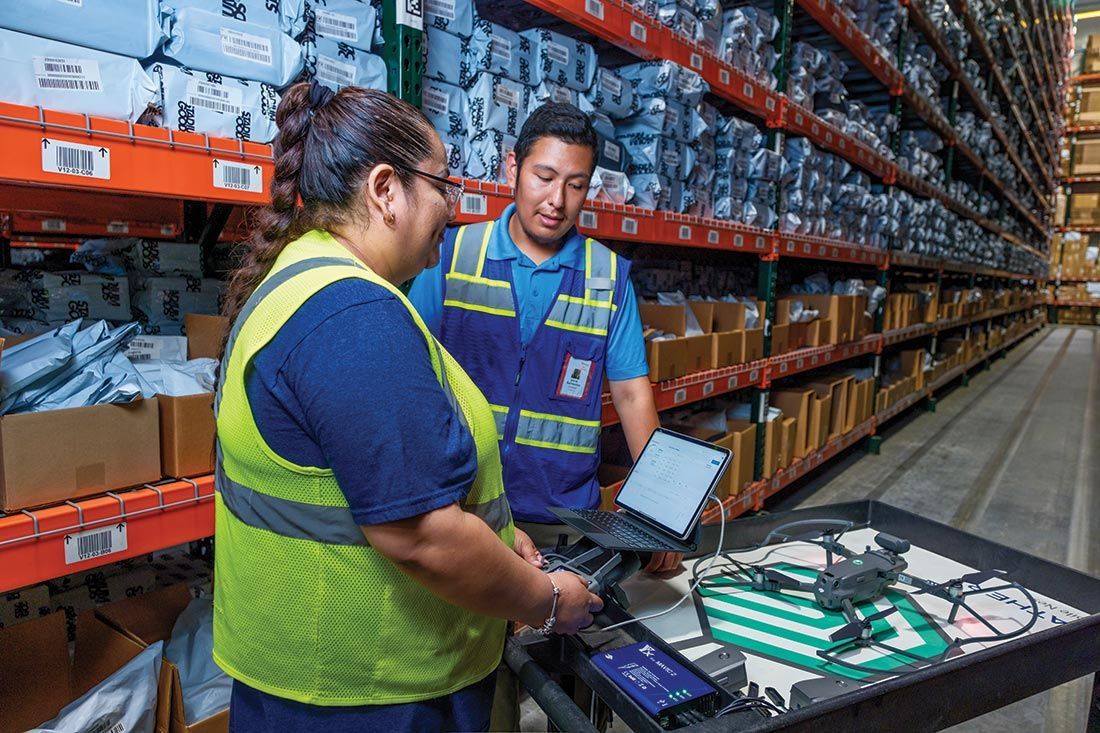
One inventory quality control staffer manages each drone mission. A single drone flies autonomously within the aisle once the mission is set up—the associate isn’t working a joystick to fly the unit—but it does require some human oversight to set up and close out a mission. The Hillsborough site keeps two drones on hand, to have one as backup.


Once each drone flight is complete, the Gather AI dashboard highlights any variances against what the mission found, and what Barrett’s WMS says should be in the locations just scanned. In the event there is a variance, it’s investigated and corrected.


Right-sized packaging efficiency


“The CMC system helps us by building boxes around each order to help us reduce the cost of shipping, by having that right-sized carton, while also reducing the manual labor that was previously needed for packing out those orders,” - Rapoza


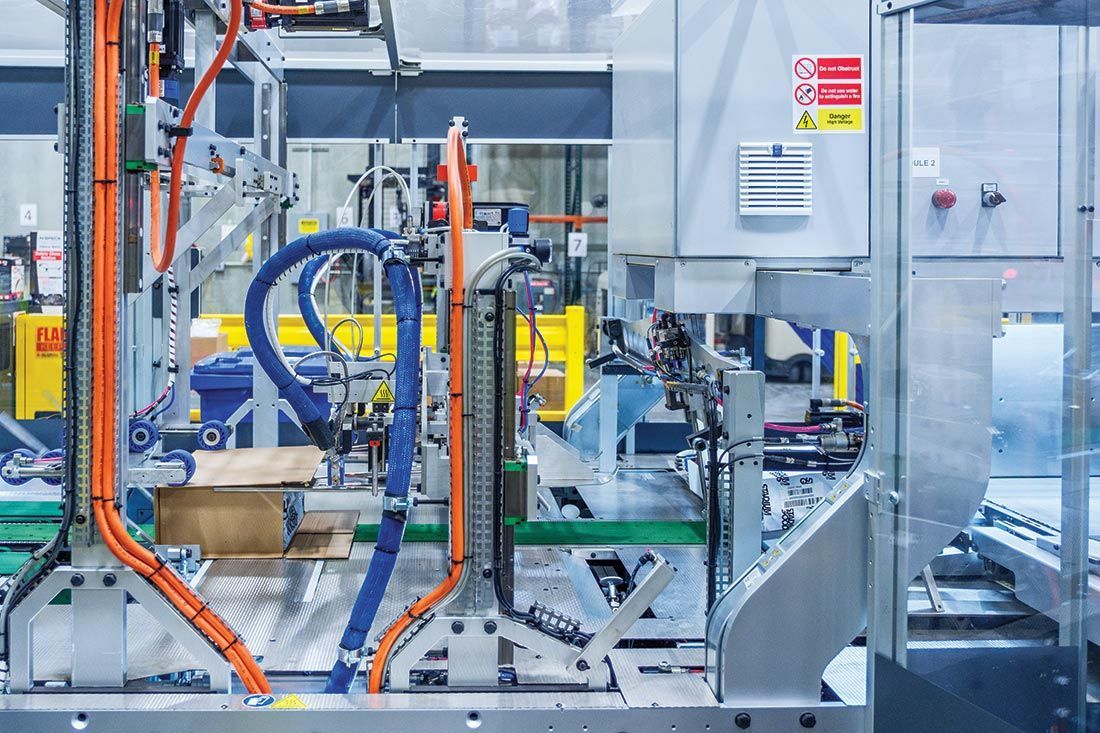
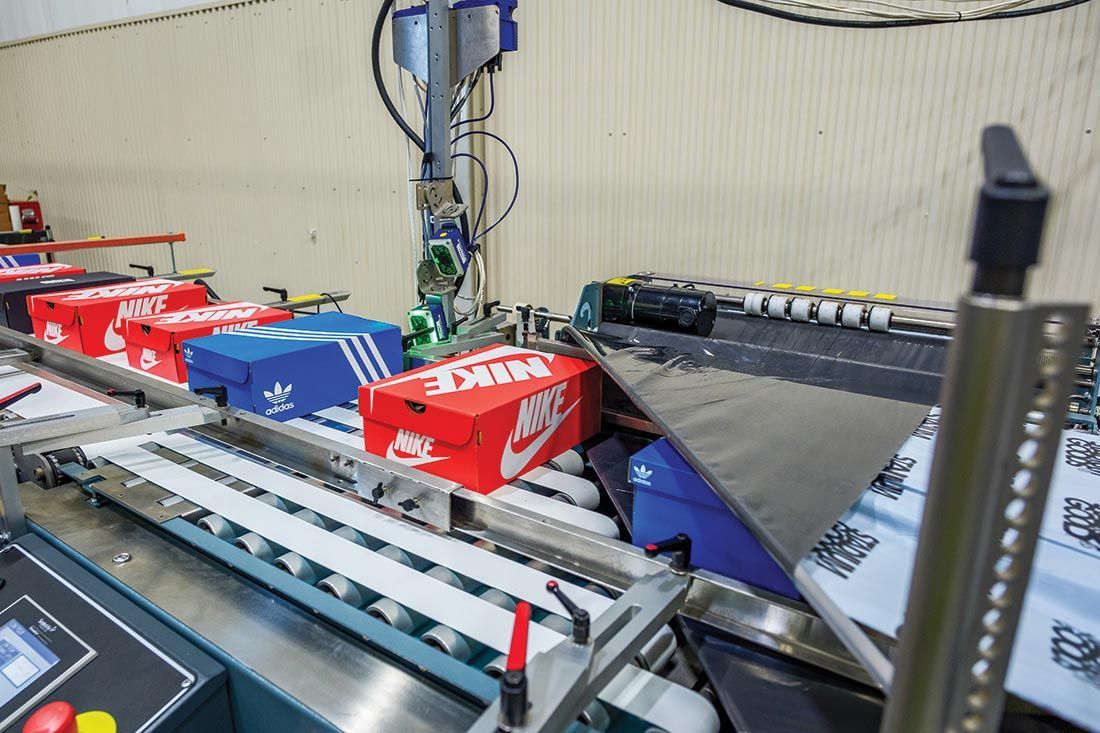
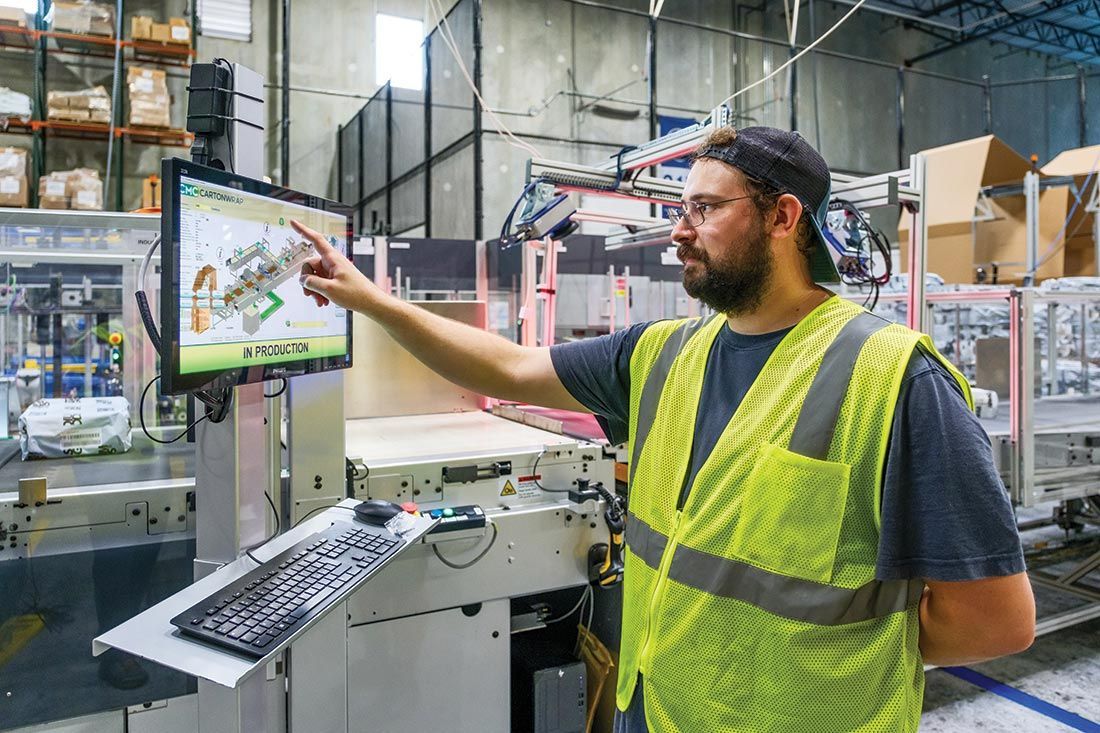
Another way Barrett Distribution Centers is bringing targeted efficiencies to its order fulfillment for Stadium Goods at the Hillsborough, N.J., facility is through packaging automation. Specifically, Barrett deployed an automatic carton packaging system (CMC Packaging Automation) that forms perfectly sized shipping cartons for shoes being fulfilled on behalf of Stadium Goods.


The CMC CartonWrap machine rapidly creates custom shipping cartons from fanfold-fed corrugated cardboard, right-sized to fit around the shoeboxes being shipped to fill single-line orders. The system also automatically applies the shipping label.


Before using the system, packaging single-line orders for Stadium Goods was done using manual pack out stations, with up to 27 stations in use during peak times. Now, except for times of peak order volume, the automation handles the pack out tasks, with 12 pack out stations in reserve for peak times or multi-line orders.


“The CMC system helps us by building boxes around each order to help us reduce the cost of shipping, by having that right-sized carton, while also reducing the manual labor that was previously needed for packing out those orders,” says Rapoza. “There is no direct tie between the drone system and the CMC solution, though ultimately, they are both components of how we are driving down costs while hitting service level agreements through the use of some of these technologies.”


To help reduce the information technology time and effort involved in integrating the right-sized packaging automation system with its WMS, Barrett used an integration software platform (SVT Robotics). Barrett also plans to use the platform to simplify the development of full bi-directional integration between its drone inventory monitoring system and its WMS.


The end result is near perfect LP accuracy for the unique cases held in the VNA storage for Stadium Goods. “The LP accuracy is 99.9% or better, so in practice, we know we have every pair of shoes in the building in the right location, so when it’s time to pick, those shoes are right where they are supposed to be,” says Glanzer. “That level of LP accuracy positively impacts everything we need to do downstream, for the pickers, for the packers, and for getting each shipment on the truck at the right time, to meet the end customer’s delivery expectation.”


Glanzer says the drones have proved valuable for tracking LPs on pallets at Hillsborough for other clients, though the drone monitoring holds especially high value for Stadium Goods. “When it is time to pick, the cases are there literally 100% of the time,” he says. “What makes it so effective is that this case inventory is all unique, with its own LP bar code, readable by a drone in the storage medium.”

Sometimes a drone might return a blurred image, but these can usually be zoomed in on enough to read the LP bar code and determine if the case is in the correct location, says Glanzer.


Another lesson Barrett has learned about the use of drones is that when they are reading LPs on pallets, there should not be excessive pallet overhang, to minimize the risk of a drone striking a pallet. Consistent placement of LP labels helps make the drone system more effective.


Barrett and Gather AI will be working on integration between the drone system’s software and the WMS so variances and count details can flow right into the WMS to simplify the updating of data and creation of any corrective moves. Integration software initially brought on by Barrett to speed up the integration of a right-sized, packaging automation solution with its WMS (see box, page 24), is expected to help with this integration between the Gather AI system and the WMS.


Targeted efficiency


Barrett is selective in how it leverages the drones, adds Rapoza. For example, it isn’t used in typical forward picking areas where a drone would lack a clear line of sight to bar codes, and for which associates already have system-directed manual scan verification steps in WMS to ensure accuracy. But for very efficiently counting LPs on pallets or cases, especially for fast-moving goods or unique cases, the drones are a labor efficient way to take LP accuracy to the next level.


“Our LP cycle count program with the drones is really focused on what moves, instead of counting product that sits there, like a D-level SKU,” says Rapoza. “For those goods, the drone technology allows us to capture LP data much more efficiently, with much fewer labor hours, and with greater accuracy, than what we could do with a manual counting process. It helps achieve higher quality, at a lower cost.”


Recent Blog Posts
By Faith Artieda June 24, 2026
If you work in supply chain, you've probably heard the term omnichannel fulfillment so many times that it's started to lose meaning. It's become one of those logistics buzzwords that gets thrown around in conference sessions and sales presentations. But for brands trying to grow, omnichannel fulfillment isn't a trend—it's an operational reality. A decade ago, many brands sold through one or two channels. Today, a single brand might be shipping direct-to-consumer orders, replenishing Amazon inventory, fulfilling wholesale accounts, and managing retail compliance requirements simultaneously. The challenge isn't opening new sales channels. The challenge is supporting all of them without creating separate supply chains for each one. That's what omnichannel fulfillment really means in 2026. It's the ability to manage retail, ecommerce, marketplace, and wholesale fulfillment through a unified operation that provides inventory visibility, operational flexibility, and a consistent customer experience. And that's easier said than done. Many growing brands find themselves adding channels faster than they add infrastructure. What started as an ecommerce fulfillment operation suddenly needs to support retailer routing guides, EDI requirements, compliance labeling, and increasingly complex inventory management. Before long, inventory gets fragmented, processes become reactive, and fulfillment starts slowing growth instead of enabling it. The brands that navigate this successfully tend to have one thing in common: they stop thinking about fulfillment as a warehouse function and start treating it as a strategic part of their business. That's where the right logistics partner can make a significant difference. At Barrett, omnichannel fulfillment has been at the core of our business for decades. We support brands across retail, ecommerce, wholesale, and marketplace channels from a nationwide network of distribution centers designed to handle the complexities of modern commerce. What makes omnichannel fulfillment work isn't simply having warehouse space. It's having the systems, processes, and expertise to manage different order profiles, customer requirements, and service expectations within a single operation. A direct-to-consumer order and a retail replenishment shipment may originate from the same inventory, but they require very different workflows. One may involve individual pick-and-pack fulfillment with rapid delivery expectations, while the other demands strict retailer compliance, ASN management, and precise routing instructions. Barrett's operations are built to support both. Our technology ecosystem connects warehouse management, transportation management, customer reporting, and trading partner integrations to provide visibility across the supply chain. Combined with dedicated account management and continuous improvement initiatives, this allows customers to scale into new channels without constantly rebuilding their logistics infrastructure.The result is a fulfillment operation that can adapt as a business grows. Whether a brand is expanding into major retail accounts, increasing ecommerce volume, launching on Amazon, or managing all three simultaneously, the goal remains the same: create a seamless experience for customers while maintaining operational efficiency behind the scenes. Because in today's market, customers don't think about channels. They simply expect products to arrive on time and accurately. The companies that succeed in 2026 will be the ones that can deliver that experience consistently, regardless of where the order originated. That's the promise of omnichannel fulfillment—and it's why more brands are looking for logistics partners that can do more than move inventory. They're looking for partners that can help them grow.
By Faith Artieda June 23, 2026
Launching a new fulfillment partnership is about more than inventory transfers, system integrations, and shipping orders. It's the start of a relationship built on trust, collaboration, and a shared commitment to delivering exceptional customer experiences. At Barrett Distribution, we believe a successful go-live deserves to be celebrated.  After months of planning, onboarding, testing, and preparation, launch day represents a major milestone for both our clients and our team. That's why we don't simply flip a switch and start shipping. We make the day memorable, meaningful, and reflective of the brand we're proud to support. Here's what happens when a new brand goes live at Barrett. A Warehouse Celebration Designed Around the Brand Walk into a Barrett facility on launch day, and you may notice something unusual. The warehouse is often transformed with themed decorations, branded signage, and creative touches inspired by the client. From custom displays to branded treats and team apparel, our operations teams embrace the excitement of welcoming a new partner. These celebrations aren't marketing events or publicity stunts. They're our way of saying thank you. Thank you for trusting us with your products, your customers, and your brand reputation. We understand that choosing a fulfillment partner is a significant decision. A successful launch represents countless hours of work by both organizations, and we believe it's worth recognizing. The First Orders Get Special Attention Once the celebration begins, it's time for what matters most: executing flawlessly. The first orders are carefully reviewed and processed by our operations team to ensure everything is working exactly as planned. Inventory locations are verified, workflows are monitored, and each step of the fulfillment process is executed with precision. Our team understands that these first shipments create an important first impression. That's why launch day receives an extra level of attention and care. Every scan, every pick, and every pack matters. Bringing the Brand Experience to Every Shipment At Barrett, fulfillment is about more than getting products from a warehouse to a doorstep. It's about protecting and enhancing the customer experience. Many of the brands we serve have invested heavily in creating a unique unboxing experience. Whether that includes branded packaging, promotional inserts, thank-you cards, samples, or custom packing materials, our teams ensure those details are executed exactly as intended. Associates carefully hand-pack orders using each client's unique packaging requirements, helping create an experience that feels authentic to the brand. When the customer opens the box, it should feel like it came directly from the brand they love—not from a third-party warehouse. That's the standard we strive for every day. Quality Checks Before Every Shipment Leaves Before launch-day orders leave the building, additional quality reviews help ensure accuracy and consistency. Packages are inspected, processes are monitored, and teams work together to verify that orders are shipping correctly and efficiently. This focus on quality reflects Barrett's broader commitment to operational excellence and brand stewardship. We know our clients depend on us to represent their brand, and we take that responsibility seriously. It's one more way we help ensure a smooth launch and a positive customer experience from day one. Celebrating Success Together After the first orders are packed, verified, and shipped, everyone gets the opportunity to take a breath and celebrate. Clients and warehouse teams come together for a themed lunch designed around the brand and the occasion. It's a chance to recognize the hard work, collaboration, and dedication that made the launch possible. Implementation teams, operations leaders, account managers, warehouse associates, and client stakeholders all play a role in bringing a new partnership to life. The lunch serves as a reminder that successful fulfillment isn't just about systems and processes—it's about people working together toward a common goal. And that's something worth celebrating. More Than a Go-Live At Barrett, successful launches don't happen by accident. They are the result of proven onboarding processes, dedicated project management, operational expertise, advanced technology, and a commitment to collaboration every step of the way. Our implementation methodology is designed to help clients transition smoothly and confidently while maintaining the service levels their customers expect. But what truly sets Barrett apart is our people. Many logistics providers focus solely on moving products. We focus on building partnerships. We take the time to understand our clients' brands, customer expectations, growth plans, and long-term goals. We celebrate their milestones, protect their brand experience, and work alongside them as an extension of their team. Because to us, a go-live isn't the finish line. It's the beginning of something bigger. Ready to Launch with a 3PL That Feels Like Part of Your Team? Whether you're preparing for your first outsourcing initiative, transitioning from another provider, or scaling to support continued growth, Barrett delivers the expertise, technology, and partnership needed to help your business succeed. From customized onboarding and seamless implementations to exceptional fulfillment execution and dedicated account support, we're committed to helping brands create remarkable customer experiences from the very first order. Contact Barrett Distribution today to learn how we can help bring your next chapter to life
By Faith Artieda June 22, 2026
There's no shortage of advice for growing ecommerce brands. Buy more ads. Expand channels. Launch new products. Add more technology. But during a recent Matt's Chats webinar, one message came through loud and clear: growth isn't usually what breaks a business. Complexity does. Hosted by Matt Hertz of Third Person, the conversation brought together Barrett Distribution's Brian Corbett , Waterdrop's Head of U.S. Operations Courtney Schick , and Yuzu Co-Founder Drew Carpenter to discuss the realities of scaling modern ecommerce operations. What followed wasn't a discussion about growth hacks or overnight success stories. Instead, it was an honest look at the operational decisions that determine whether a brand thrives or stalls as it grows. "I Consistently Come Back to the People" When Matt asked what challenges growing brands face today, Brian Corbett's answer wasn't technology, automation, or AI. It was people. "I consistently come back to the people," Corbett said when discussing what separates successful operations from struggling ones. After more than a decade in supply chain and logistics—and years as an entrepreneur before that—Corbett explained that operational breakdowns often happen when brands enter new channels without the right expertise behind them. A company may have mastered direct-to-consumer fulfillment, but adding retail compliance, wholesale distribution, or major retail partners introduces entirely new requirements. Suddenly, mistakes that never mattered before become expensive problems. His point was simple but important: software matters, but experience matters just as much. "The right GM can walk out on the floor and identify a poorly labeled pallet in three seconds because they've seen it for ten years." That's the kind of expertise that can't be downloaded or installed. Growth Creates New Problems Courtney Schick offered a brand-side perspective that many ecommerce operators will recognize immediately. For Waterdrop, growth isn't just about selling more products. It's about making sure products are available exactly where customers expect them. "Having the right product at the right time in the right places." Simple in theory. In reality, it's one of the most difficult challenges in supply chain management. As brands expand across DTC, Amazon, retail, and wholesale channels, inventory planning becomes increasingly complex. Demand spikes, channel requirements, replenishment schedules, and forecasting accuracy all become interconnected. One operational issue quickly becomes a customer experience issue. And one customer experience issue can quickly become a growth issue. The Case for Simplicity One of the most interesting moments came during a discussion about multi-channel fulfillment. Should brands use different fulfillment providers for different channels? Schick's answer was immediate. "My personal preference is to have one provider that can do all those things for you." Corbett didn't disagree. In fact, he pointed to a broader trend he sees across the industry."Brands are consolidating." Rather than spreading inventory across multiple providers and facilities, many companies are simplifying their networks to reduce complexity, improve visibility, and create operational consistency. The logic is straightforward. Managing three fulfillment providers isn't just three times harder than managing one. It often creates entirely new problems around inventory visibility, communication, reporting, and customer service. For many brands, simplification has become a competitive advantage. The Unsexy Work That Matters Most Toward the end of the discussion, Matt asked a question every operator should think about: Where should brands be investing their time and resources right now? There was no discussion about revolutionary technology or secret growth tactics. Instead, the conversation focused on something much more fundamental. Data. For Waterdrop, Schick explained that one of their biggest initiatives is improving master data accuracy across the organization. Clean data impacts reporting, inventory management, forecasting, and decision-making throughout the business. Corbett expanded on that idea."Clean up your data. Clean up your SKUs." He also emphasized the importance of SKU retirement programs—removing products that no longer contribute meaningful value to the business. Excess inventory, poor data, and bloated product catalogs create friction that slows growth and reduces profitability. It's not glamorous work. But it works. As Corbett joked, it's a little like cleaning a bathroom. Nobody wants to do it. Everyone benefits when it's done. A Reminder for Growing Brands The biggest takeaway from the conversation wasn't about technology or fulfillment. It was about discipline. Successful growth doesn't happen because a company adds more channels, more products, or more software. It happens because they build operational foundations strong enough to support that growth. The brands that win aren't always the fastest-growing. They're often the ones willing to focus on the fundamentals—great people, clean data, strong partnerships, and operational excellence. As the webinar demonstrated, those principles may not be flashy. But they continue to be some of the most reliable drivers of long-term success.
More Posts