
Navigating Retail Supply Chain Challenges with the Right 3PL Partner

Katherine Wroth • November 18, 2024

Until the 1920s, shopping primarily occurred at the local neighborhood corner store or small-town square. Then, chain and department stores emerged, offering a broader variety of goods and transforming shopping into an experience. By 1956, the first shopping mall was constructed, and large retailers began to dominate, gradually pushing out smaller mom-and-pop shops.


However, no shift has reshaped the retail world as profoundly as eCommerce. Today’s retail landscape is a digital frontier where anyone with a product and an internet connection can reach a global audience. Yet, this transformation has brought a range of challenges, leaving retailers and suppliers navigating a complex and evolving marketplace.


Rising inflation threatens margins, labor shortages complicate peak demand management and the shift to omni-channel distribution adds complexity. Meanwhile, changing consumer expectations are driving a need for greater speed and adaptability.


These challenges underline the importance of having an efficient, agile, optimized and sustainable supply chain that can flex during unexpected peaks, overcome disruptions and meet new challenges as they emerge. One way to achieve this is by partnering with an experienced third-party logistics provider (3PL) like Barrett Distribution. Here are five key benefits of outsourcing retail logistics to a reputable 3PL.


1. Access to Skilled and Scalable Labor

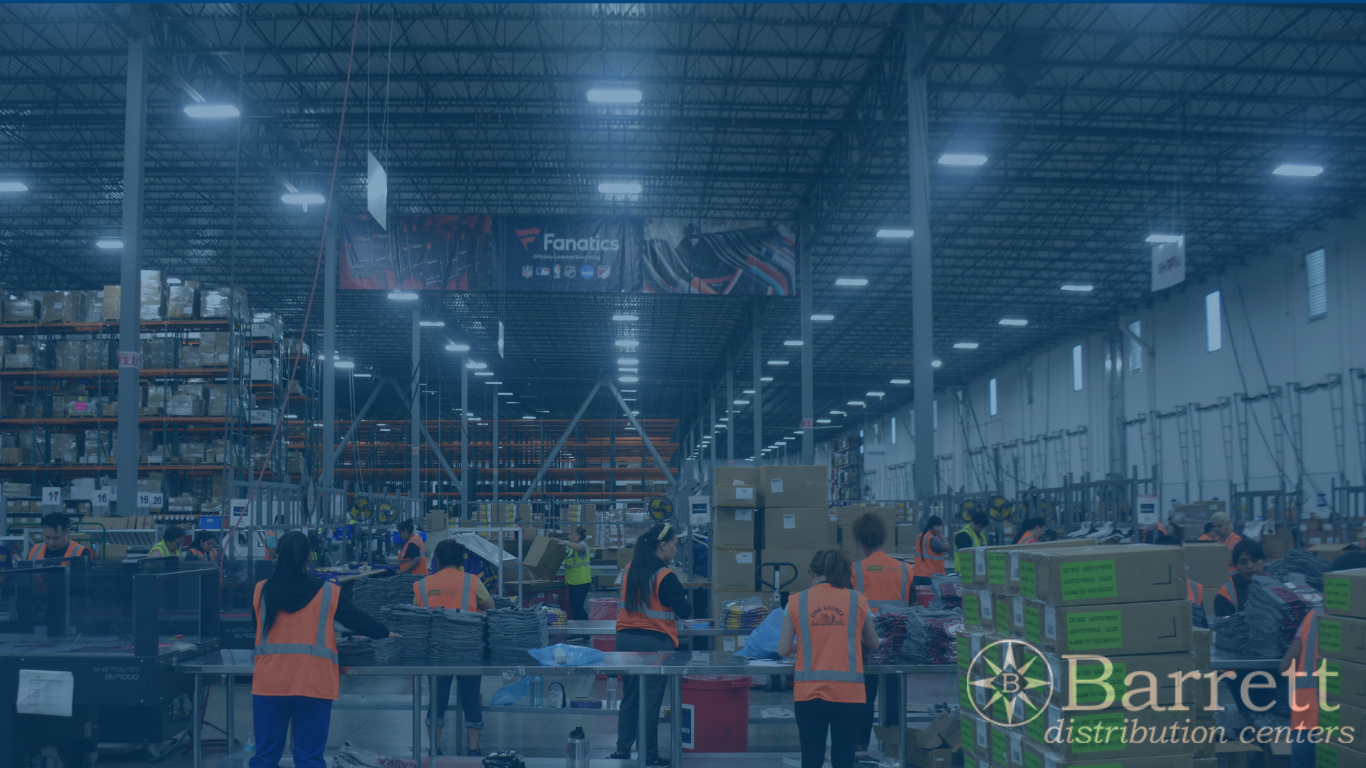
Labor shortages remain a significant hurdle, especially during peak seasons. By tapping into a 3PL's expansive labor pool, retailers can quickly scale their workforce to meet fluctuating needs. Barrett streamlines recruiting and onboarding processes, ensuring the right talent is matched to the right roles. This helps retailers efficiently manage growth and seasonal surges with confidence.


2. Investment in Automation and Innovation

Staying competitive in today’s fast-paced retail environment requires constant innovation. Many companies, however, lack the resources to prioritize supply chain digitalization and automation. Barrett continuously invests in advanced technologies like autonomous mobile robots and predictive picking algorithms, enabling clients to meet market demands with enhanced efficiency. These scalable innovations provide the flexibility needed for future growth.


3. End-to-End Supply Chain Visibility

Comprehensive visibility is no longer a luxury but a necessity, especially in direct-to-consumer retail. While most companies utilize transportation visibility tools, they often fail to cover a product's full journey. Barrett offers end-to-end visibility that spans warehousing, packaging, and transportation. This capability ensures seamless inventory management and optimizes product flow, allowing retailers to respond quickly to customer needs.


4. Sophisticated Data Analytics and Insights

Retailers often underutilize the power of data analytics to make faster, smarter decisions. By partnering with a 3PL that excels in data analytics, businesses gain actionable insights into efficiency, sustainability and customer behavior. Barrett leverages cutting-edge technologies like predictive analytics and artificial intelligence to identify trends, benchmark performance and uncover new opportunities. This data-driven approach ensures retailers stay ahead of shifting market demands.


5. Customized and Efficient Packaging ºÃÉ«ÏÈÉú

A one-size-fits-all packaging strategy no longer works. Barrett integrates materials management and packaging into distribution operations, reducing costs and increasing speed. Their tailored approach ensures packaging aligns with consumer expectations for quality, sustainability and efficiency across all channels.


Focus on Your Business—Leave Logistics to the Experts

Today’s consumers expect memorable and convenient shopping experiences, whether in-store or online. Meeting these expectations requires a well-managed supply chain that can adapt to challenges and capitalize on opportunities. By outsourcing logistics to a trusted 3PL like Barrett, retailers can concentrate on their core strengths while relying on experts to handle the complexities of supply chain management.


Why Barrett? We empower retailers to navigate uncertainty, enhance agility and deliver superior customer experiences, helping businesses thrive in a competitive retail environment.


Are you ready to optimize your retail supply chain? Discover the Barrett way—contact us today for a complimentary supply chain consultation. 

Recent Blog Posts
By Faith Artieda August 13, 2026
Yes, storing inventory in California can reduce shipping costs—especially for businesses serving customers on the West Coast or importing products through Pacific ports. By positioning inventory closer to customers, companies can shorten shipping distances, rely more on ground transportation, and reduce overall transportation expenses while improving delivery speed. Key Takeaways Storing inventory in California can lower shipping costs by reducing transit distances to West Coast customers. A California warehouse helps businesses improve delivery times while decreasing reliance on expensive expedited shipping. Partnering with an experienced 3PL allows businesses to optimize inventory placement, transportation, and fulfillment operations. Why Does Warehouse Location Affect Shipping Costs? Shipping costs are influenced by more than package size and carrier rates. The distance between your warehouse and your customers plays a major role in determining how much you spend on transportation. When inventory is stored closer to where orders are being delivered, shipments travel fewer miles. This often results in lower parcel costs, faster delivery times, and greater flexibility when choosing shipping methods. For businesses with a large customer base in the western United States, storing inventory in California can be a simple yet effective way to reduce transportation expenses while improving service levels. How Does a California Warehouse Lower Shipping Costs? A California warehouse allows businesses to fulfill orders closer to millions of consumers across the West Coast. Instead of shipping every order from a warehouse located in another region, businesses can use ground shipping to reach customers in California and neighboring states more quickly. Ground transportation is typically more cost-effective than expedited air services, making it possible to reduce shipping expenses without sacrificing delivery speed. As shipping volumes increase, these savings can add up significantly, particularly for ecommerce businesses fulfilling hundreds or thousands of orders each month. Why Is California a Strategic Location for Distribution? California is one of the largest consumer markets in the United States and serves as a major logistics hub for domestic and international commerce. The state offers access to extensive highway networks, major parcel carrier operations, international airports, and some of the nation's busiest seaports. This infrastructure allows businesses to efficiently move products from ports to warehouses and then on to customers throughout the western United States. For importers, storing inventory near a port can also reduce inland transportation costs while making products available for fulfillment more quickly. Which Businesses Benefit Most from California Warehousing? A California warehouse can benefit a wide range of businesses, but it is especially valuable for companies that regularly ship to customers in the western United States or import products from overseas. Ecommerce brands often use California fulfillment centers to improve delivery speeds and remain competitive with customer expectations for fast shipping. Retail suppliers can also benefit by positioning inventory closer to stores and distribution partners throughout the region. Businesses with seasonal demand or rapid growth may find that adding a West Coast warehouse provides greater flexibility while supporting future expansion. Can a California Warehouse Support Both Retail and Ecommerce Fulfillment? Yes. Many businesses today sell through multiple channels, including ecommerce websites, online marketplaces, wholesale customers, and retail stores. A strategically located California warehouse can support all of these channels while helping businesses maintain consistent inventory visibility and operational efficiency. Barrett Distribution operates fulfillment facilities in California as part of its nationwide logistics network and specializes in omnichannel fulfillment, supporting both business-to-business retail distribution and direct-to-consumer ecommerce fulfillment through customized warehouse solutions. How Does a 3PL Help Optimize Shipping Costs? Reducing shipping costs isn't just about warehouse location—it also requires efficient operations, strong carrier relationships, and advanced technology. An experienced third-party logistics (3PL) provider can help businesses determine the best inventory strategy based on customer demand, shipping patterns, and growth plans. Modern warehouse technology also provides real-time inventory visibility, helping ensure orders are fulfilled from the most efficient location. Barrett Distribution utilizes a Tier 1 Warehouse Management System, transportation management software, and customer reporting tools that provide visibility into inventory, orders, and fulfillment performance, helping customers improve operational efficiency across their supply chains. Is Storing Inventory in California the Right Choice? If a large percentage of your customers are located on the West Coast, storing inventory in California can provide measurable savings while improving delivery performance. By reducing shipping distances, improving transit times, and supporting efficient distribution, a California warehouse can help businesses build a more responsive and cost-effective supply chain. When combined with an experienced logistics partner, it also provides the flexibility to scale operations as customer demand grows. For businesses looking to strengthen their fulfillment strategy, California remains one of the most strategic warehouse locations in the country. Frequently Asked Questions Does storing inventory in California reduce shipping costs? Yes. Storing inventory closer to West Coast customers reduces shipping distances, allowing businesses to lower transportation costs and improve delivery times. Is California a good location for a fulfillment center? California is an excellent location for fulfillment because it provides access to a large consumer population, extensive transportation infrastructure, major ports, and regional parcel carrier networks. Do ecommerce businesses benefit from California warehousing? Yes. Ecommerce businesses can improve delivery speed, reduce shipping costs, and better meet customer expectations by positioning inventory closer to West Coast customers. Can a 3PL help determine the best warehouse locations? Yes. Experienced third-party logistics providers, including Barrett Distribution, help businesses develop inventory strategies that improve fulfillment performance while reducing transportation costs through strategically located warehouse networks.
By Faith Artieda August 12, 2026
Offering two-day shipping starts with positioning inventory closer to your customers, optimizing your fulfillment operations, and partnering with a third-party logistics (3PL) provider that has a strategically located warehouse network. By reducing transit times and improving order processing, businesses can provide fast, reliable shipping without dramatically increasing costs. Key Takeaways Two-day shipping is achieved through strategic inventory placement, efficient fulfillment processes, and optimized transportation—not just faster carriers. A multi-location warehouse network helps position inventory closer to customers, reducing transit times and shipping costs. An experienced 3PL can provide the technology, infrastructure, and operational expertise needed to consistently meet two-day delivery expectations. Why Is Two-Day Shipping So Important? Fast shipping has become an expectation for today's consumers. Whether customers are shopping directly from a brand's website or through an online marketplace, delivery speed often influences purchasing decisions. Offering two-day shipping can improve customer satisfaction, increase conversion rates, and encourage repeat purchases. For businesses, it also creates a competitive advantage by meeting the service levels customers have come to expect from leading retailers. The challenge is delivering that speed without significantly increasing fulfillment and transportation costs. How Can Businesses Offer Two-Day Shipping? Many businesses assume they need to rely on expensive expedited shipping services to achieve two-day delivery. In reality, the most effective strategy is reducing the distance between inventory and customers. By storing products in strategically located fulfillment centers, businesses can use standard ground shipping to reach more customers within two days. This approach lowers transportation costs while maintaining fast delivery times. As order volumes grow, many companies expand from a single warehouse to a multi-node fulfillment strategy, positioning inventory in multiple regions to improve nationwide coverage. Does Warehouse Location Affect Delivery Speed? Absolutely. Warehouse location is one of the biggest factors influencing shipping speed. If inventory is stored hundreds or thousands of miles away from customers, even the most efficient fulfillment operation may struggle to achieve two-day delivery consistently. Strategically located warehouses allow businesses to shorten shipping distances and improve transit times using ground transportation. This not only supports faster deliveries but also helps reduce parcel shipping costs compared to relying on expedited air services. Barrett Distribution operates a nationwide fulfillment network with facilities in Massachusetts, New Jersey, New York, Maryland, Virginia, Tennessee, Texas, and California, allowing businesses to position inventory closer to customers across the country. How Does a 3PL Support Two-Day Shipping? An experienced third-party logistics provider offers much more than warehouse space. A 3PL helps businesses improve fulfillment speed through optimized warehouse operations, scalable labor, advanced technology, and established carrier relationships. Instead of building this infrastructure internally, companies can leverage an experienced partner with proven processes already in place. Barrett Distribution supports both business-to-business retail distribution and direct-to-consumer ecommerce fulfillment through customized omnichannel solutions. Its nationwide warehouse network, transportation management capabilities, and customer-focused operations help businesses improve delivery performance while maintaining flexibility as demand grows. What Technology Helps Enable Two-Day Shipping? Fast shipping depends on accurate and efficient warehouse operations. Modern Warehouse Management Systems (WMS) help optimize receiving, inventory management, order processing, and picking workflows. Real-time inventory visibility allows businesses to fulfill orders from the most appropriate location while reducing delays caused by inventory discrepancies. Barrett utilizes a Tier 1 Warehouse Management System, transportation management software, and customer reporting tools that provide real-time visibility into inventory, orders, and fulfillment performance. These technologies help improve operational efficiency while supporting faster, more accurate order fulfillment. Is Two-Day Shipping Right for Every Business? Not every company needs to offer two-day shipping nationwide, but many can benefit from offering it in key regions where customer demand is highest. Businesses should evaluate factors such as customer locations, shipping volumes, product characteristics, and transportation costs when developing their fulfillment strategy. In many cases, strategically placing inventory in regional fulfillment centers provides the speed customers expect without dramatically increasing logistics expenses. Working with an experienced 3PL can help businesses determine the right warehouse locations and fulfillment model to balance cost, speed, and scalability. Frequently Asked Questions How do I offer two-day shipping? The most effective way to offer two-day shipping is by storing inventory closer to customers, optimizing warehouse operations, and partnering with a 3PL that has a strategically located fulfillment network. Do I need multiple warehouses for two-day shipping? Not always, but multiple warehouse locations can significantly improve delivery coverage by positioning inventory closer to regional customer bases. This often allows businesses to use ground shipping instead of more expensive expedited services. Can a 3PL help me offer two-day shipping? Yes. An experienced third-party logistics provider can provide warehouse space, fulfillment technology, transportation expertise, and a strategically located distribution network to support two-day delivery goals. How does Barrett Distribution support fast shipping? Barrett Distribution operates a nationwide network of fulfillment centers and utilizes advanced warehouse and transportation technology to support efficient omnichannel fulfillment. By strategically positioning inventory and optimizing warehouse operations, Barrett helps businesses improve delivery performance while maintaining high service levels.
By Faith Artieda August 11, 2026
If you've ever requested a quote from a third-party logistics (3PL) provider, you've probably wondered why the pricing can vary so much from one company to another. The truth is, there isn't a standard rate for fulfillment. Every business has different products, order volumes, customers, and operational needs. That's why pricing isn't just about storing inventory and shipping boxes—it's about understanding how your business operates and building a solution around it. At Barrett Distribution, that process starts with asking a lot of questions. While it may seem like we're digging deep into your business, there's a good reason for it: the more we understand your operation, the more accurate—and fair—your pricing will be. It All Comes Down to Two Things According to Harrison Smith , Director of Commercial Revenue at Barrett Distribution, most 3PL pricing can be broken down into two categories. "Pricing falls into two buckets: storage and handling. You're paying for the space and you're paying for the people." Storage is fairly straightforward. It's the warehouse space your inventory occupies. Factors like your inventory levels, how products are stored, and the location of the warehouse all influence this portion of your costs. Handling is where every business starts to look different. Receiving inventory, picking orders, packing shipments, applying retail labels, processing returns, and shipping products all require labor. A company shipping 100 direct-to-consumer orders each day has very different fulfillment needs than one sending truckloads to national retailers. Those differences affect how much work is required behind the scenes—and ultimately, how pricing is structured. Why We Ask So Many Questions If you've ever gone through the quoting process with a 3PL, you've probably been asked for order history, SKU counts, inventory reports, seasonality, shipping destinations, and more. It can feel like a lot. But those details allow a provider to build a pricing model based on your actual business rather than making educated guesses. "The better the data, the better our pricing," Harrison says. "When we have to make assumptions, those assumptions are naturally going to be conservative." Think of it this way: if a logistics partner doesn't fully understand your operation, they'll need to account for unknowns. That often leads to pricing that's less precise because it includes extra cushion for uncertainty. The more complete the picture, the more confidence everyone has in the solution. Price Is Only Part of the Story It's natural to compare quotes and look for the lowest number. But choosing a 3PL based on price alone can overlook what's actually included in that investment. Reliable fulfillment requires experienced people, proven processes, technology, and a commitment to quality. Inventory accuracy, on-time shipping, retailer compliance, and responsive customer support all take resources to deliver consistently. Those are the things that help prevent costly mistakes like chargebacks, inventory discrepancies, delayed shipments, and unhappy customers. As Harrison explains: "We're never going to be the lowest price, but we are going to be competitive. What our partners are paying for is the quality that our operations deliver." While a lower price may look appealing on paper, the real cost of fulfillment often comes from service failures—not the monthly invoice. Finding the Right Fulfillment Partner A good pricing conversation shouldn't feel like negotiating over pennies. It should feel like building a solution that supports your business today and as it grows. The right 3PL takes the time to understand your operation, asks thoughtful questions, and designs a fulfillment strategy that aligns with your products, customers, and long-term goals. When you're evaluating fulfillment providers, don't just ask, "How much does it cost?" Ask how that price was built—and what you'll receive in return. Because in logistics, the best value isn't always the lowest quote. It's the partner that helps your business run more efficiently, deliver a better customer experience, and grow with confidence.
More Posts